I've been slacking when it comes to blogging and reading lately, so I decided to share my weekend plans with you guys. Hopefully by typing it all out, I will actually stick to doing what I want to do these next few days.
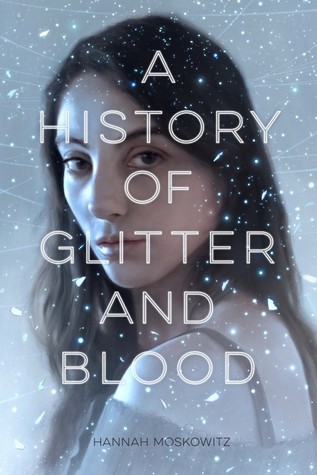
First of all, one of the most important things I need to do is read. I thought I would have finished A History of Glitter and Blood by this week, at the latest, yet I only started it last night. This one definitely has to be finished before July 1 if I want to complete my monthly goal of reading only diverse books. I don't want to fail before the month even begins, but I won't put aside a review book due to a challenge I set for myself, either.
Next, I need to type up some reviews! I'm never behind on reviews, I always write them right away ... And yet, this past month I have let myself put off reviews to the point where I have about three or four sets of notes just sitting around, waiting to be typed into actual posts. And while I know that isn't a lot for some bloggers, for me it definitely is! I never get more than two reviews behind. Last week, I actually had to change my post schedule simply because I didn't have a review ready that I thought would be finished by then. (And I was too lazy to write it, still!)
My third weekend goal is to take some book photos. I've realized that posts on my new blog take much longer. Mostly, because it has made me more passionate about blogging again. I like my new ideas and I want to spend time on them. But also, pictures. I can only take them during the day, when there's sunlight. (At least, if I want a decent picture.) So while I can post reviews to this blog whenever, I have to be more careful about scheduling reviews on BookMatcher. I can't do them so last-minute, unless I have pictures ready beforehand. Which I will, because there is no way I will have reviews ready on time if I don't. I'm a procrastinator!
Finally, my last goal is to keep up with planning my novel for Camp NaNoWriMo. I've come up with some great ideas the last few days and I'm really getting to know my characters well, but I'm lacking some of the research I'll need to write the story -- and I don't want to be spending hours of writing time next month doing research I could have done now. I also need to develop some side characters I've been neglecting.
And that's all for me! What are your plans for the weekend? Is anyone else participating in Camp NaNoWriMo next month?
Showing posts with label writing. Show all posts
Friday, June 26, 2015
Wednesday, June 3, 2015
Story Ideas: Write Them Now, Or Give Them Time To Grow?
I think most writers have this question at some point. At the beginning it's great - we get tons of ideas, we probably mash a bunch of them together in our inexperience. Or we write them all at once, leaving unfinished drafts everywhere. (Or you're great from the start and tell one solid story at a time... Who knows?)
But then you realize how many separate, individual ideas you have. You begin to want a finished piece, or at least a finished first draft! But which idea do you start with? I mean, they're all fantastic (or most of them, anyway). You could go with the one you've been working on for two months that is half-finished, or you could start the new idea that came to you in a dream last night.
You should probably let your new idea sit for awhile.
Yes, it's new and shiny. If you give it a couple weeks worth of attention, you can probably turn it into a fully developed plot. Or, if you're not a planner, you can just jump right into the action. And this idea is fun. Right now, it probably looks better than all of your other story ideas combined. The first thing to ask yourself in this scenario is this: If you think of a better idea, will you drop this story for the new one?
If the answer is yes, let the idea sit. That is such an easy way to jump around from project to project, never getting anything finished. And if a finished piece isn't that important to you, go for it! But otherwise? Wait.
The longer an idea sits, the better it becomes.
This isn't to say that writers should sit around writing nothing, waiting for the day they're good enough to do their ideas justice. That's another common trap.
But if you are currently working on one idea, stick with it. Your new idea - the one you probably like more right now, anyway - will only grow as it waits. Keep it in the back of your mind, let the ideas come - don't close yourself off to them, even though this isn't your current project. It might be your next one! (And if you're this excited about it, it should be!)
That said, write down any and all ideas. You don't want to forget what you have in mind. Even if you're sure you will remember it forever, write down everything. Character concepts, scene ideas, the main plot.
You might also find that, if you let your ideas sit long enough, you can combine some of your coolest plots. For example, I have a concept about fairies sitting around right now. The other night I thought of writing a love story between a writer and an editor. These characters and their story were vivid in my mind, and I knew I had to write down at least the basics. Then I thought, which of these stories will I write first? I'm not near ready to write either, but I felt so excited for both at that moment. And I realized, why can't a fairy be an author? An editor? The love story is now planned right into my fairy story, and it's a lot cooler in that setting than it was before.
But, there are times when you should write that new idea right now.
I don't know if this is just me, but sometimes a character comes with a specific voice. They get in my head and I can immediately tell that they need first-person narration. I begin writing my immediate ideas (which usually come with a few scenes that I will write out in full) and realize that the voice is completely unique to what I've written before. And that I want to write more.
If your story comes with a unique tone or voice, write immediately. Like I say, maybe it's just me - but this is the one and only time I have ever regretted not completing a story right away. Because I have a very difficult time mimicking that voice, and many times I can't later on. It's gone. And although I can tell a fine story without that specific writing style, I don't usually want to. The initial voice is better.
The only other time I can think of that you would get to a story immediately is if you don't have any other stories in progress. If you're not writing anything else at the moment, and none of your other ideas jump out at you, write the new one! You're not pushing another project aside. There's no risk of unfinished projects due to this one. And it's always, always better to be writing than waiting around. Writing before the idea is ready is better than writing nothing at all, every time.
How long do you let your ideas sit?
I used to be the person who wrote them right away, working on a million projects at once. But now, I'm a writer who works on only one or two projects at a time. It works much better for me, personally.
But each writer is different, and I want to hear from you guys! How long do you let your ideas sit before you jump into them? Do you write them right away, or could it take years before you write that shiny new idea?
Wednesday, May 6, 2015
Deleting Accounts and Growing As A Writer
After years spent on the site, I just deleted all but one of my accounts on Wattpad. I hadn't posted anything in three months and, even then, there was little I felt willing to share. So I did not think this would be a big deal for me. I did not think I would feel the need to post on my blog about it.
I began on that website in my early teens - I think I was either thirteen or fourteen, which means I joined either five or six years ago. At first I only read stories, the very popular ones on the site that were usually cliche. Then I got back into writing again on my own. Admittedly, most of my work at that time mimicked the popular fiction I saw on the site - back then, those cliches seemed genius.
Some time passed, and I began posting my work for others to see and comment on. I learned, slowly, how to interact with others on the site in a way that advertised my work and brought me reads and comments. It was the coolest thing in the world when one of my stories gained 100 views.
Fast-forward and I find the message boards, and I learn about critiques. Fast forward a long time - probably a year or two - after that, and I have learned how to accept critiques, how to take the parts I need from them, how not to be hurt every time someone criticized my work.
Now, I've known for awhile that the site was not helping my writing anymore. I have quit a few times, but the old accounts were always there to come back to. I also made new accounts - during my deletion, I got rid of four of them, and kept one simply for the name, even though I'll likely never return to it.
Since this last time I left, knowing it was final, I knew I should delete the accounts. I don't want people reading my old work anymore. I don't want to post new work anymore, not online for free. My writing can go further than that. It's worth more than that.
It was a surprise to me that, as I signed in and deleted each account, I felt emotional about it. But as I type this post - that hopefully makes sense, and doesn't just read like I'm rambling - I guess I realize why. Even though myself and my writing are far past that stage, even though I want to go new places, that site helped me so much. I always knew that, but looking back ... It gave me the strength and confidence to share my work and accept feedback. That isn't a small thing. And sharing my work with others became such a large part of my writing process, for such a long time.
It's over, for now. I won't be sharing another completed work until I am a published author. I've never liked change much, and this is a large one, although I'm definitely headed in the right direction.
I think that's all I have to say, but you guys should let me know if you've had any similar experiences to this one, or maybe just about a challenge or a change you've faced when writing. Have you ever shared your work online, and has it helped you grow as a writer?
Wednesday, April 8, 2015
On Writer's Block: Post 1
This is going to be the first of a short series of writing posts I'm planning to publish here on the blog. It's something new for me to be posting writing advice, instead of discussions, so this is kind of a test to see if I like it, and also to see how interested you guys are in what I have to say.
I recently recovered from one of the worst writer's blocks I have been in, and it really caused me to think about the different ways I have been blocked before. Old strategies I had for avoiding blocks just weren't working, and in the end I realized that happened because every block is different.
For this first post, I want to discuss what I think is a pretty common struggle: Writer's block on a specific novel or idea. It seems to me that this is the most talked-about form of writer's block, which is why I thought it might be a good base for these posts.
While I know and have heard that those ideas are helpful for other people, here are some strategies that I find more useful:
Begin looking at other stories. This takes time. It is probably best to look at short pieces, just to spark your own imagination, but sometimes you just have to take in large amounts of story. It doesn't have to mean that you're reading novels, though - I have been helped out of blocks like these by poetry, movies, and songs. Especially if you know something relates to the story you're trying to tell, this is the time to look into it.
That being said, make sure you're not taking the plot from that story. If you're unsure, you might want to wait a day and then compare. You don't want your new, major plot twist to be the same as someone else's, you just want to be inspired by their plot.
Clear your mind. Walk away from your work. The best way to do this, for me, is to do something that requires little thought. A change in scenery and a thoughtless activity can sometimes bring you right back to thinking about your project, and solving the problem. One thing that has helped me numerous times is simply going outside to sit or take a walk.
Work on something else. If you're not going to get any writing done on your current project anyway, you might as well be productive somewhere else! Even if you need to write a bunch of random scenes, or an outline to a project you will never start, you're at least writing. And it will probably be a lot easier to work through your problem once you have taken a break from it.
Talk it out. Find someone who is a good listener (or good at pretending to listen!) and tell them about your block. Explain what has happened up to this point, and what direction you're headed in (if you know). You might surprise yourself by thinking of an obvious answer during your explanation, now that you're talking and thinking about the story in a different way. Or, just maybe, the person you're talking to has a solution that will fit.
You could try to simply continue writing. This is actually a really frustrating piece of advice. Sometimes, the worst thing someone can tell you during a block is to just keep writing! But also, sometimes it is the best solution. Most likely, after forcing yourself through a bit of the story, you'll find your love for it again.
Editing the beginning is not wrong. Many pieces of writing advice make it sound like the world will end and your project will never be completed if you edit before it is finished. But if you don't like your beginning, it can be difficult to write the middle or the end. If you feel the urge to edit before you move on, and you simply can't go forward until you do - then edit! Just make sure you don't get lost in the small details, and that you return to writing once you're finished.
Think about why you used to like your work. Chances are, once you begin to think about the foundation of your story, you will like it again. There was something that urged you to begin writing in the first place. There is something you want to convey in this piece - find it and use it to keep yourself from giving up!
You are allowed to not finish. If you don't like this specific piece, maybe you fell out of love with it. Don't feel forced to return to something you are not enjoying. Find a new project that is more important to you, that you enjoy working on, and that you will be proud to complete!
Do you have any advice for these problems that I have forgotten? What is your most common problem when it comes to writer's block?
Also, let me know if you've found this post helpful. This is definitely something new for me and for the blog, so if there is a way I can improve posts like these, please let me know!
I recently recovered from one of the worst writer's blocks I have been in, and it really caused me to think about the different ways I have been blocked before. Old strategies I had for avoiding blocks just weren't working, and in the end I realized that happened because every block is different.
For this first post, I want to discuss what I think is a pretty common struggle: Writer's block on a specific novel or idea. It seems to me that this is the most talked-about form of writer's block, which is why I thought it might be a good base for these posts.
When you have writer's block for only one project, you usually just don't know what comes next.I have seen so many pieces of advice for this. If I'm honest, most of them have never worked for me. Common advice includes free-writing (something I'm terrible at; I think too much), or making a list of what could happen next in hopes that one of those ideas jumps out at you. (My problem with that one is that when I don't know what comes next, I don't have a list-full of ideas that could happen next.)
While I know and have heard that those ideas are helpful for other people, here are some strategies that I find more useful:
Begin looking at other stories. This takes time. It is probably best to look at short pieces, just to spark your own imagination, but sometimes you just have to take in large amounts of story. It doesn't have to mean that you're reading novels, though - I have been helped out of blocks like these by poetry, movies, and songs. Especially if you know something relates to the story you're trying to tell, this is the time to look into it.
That being said, make sure you're not taking the plot from that story. If you're unsure, you might want to wait a day and then compare. You don't want your new, major plot twist to be the same as someone else's, you just want to be inspired by their plot.
Clear your mind. Walk away from your work. The best way to do this, for me, is to do something that requires little thought. A change in scenery and a thoughtless activity can sometimes bring you right back to thinking about your project, and solving the problem. One thing that has helped me numerous times is simply going outside to sit or take a walk.
Work on something else. If you're not going to get any writing done on your current project anyway, you might as well be productive somewhere else! Even if you need to write a bunch of random scenes, or an outline to a project you will never start, you're at least writing. And it will probably be a lot easier to work through your problem once you have taken a break from it.
Talk it out. Find someone who is a good listener (or good at pretending to listen!) and tell them about your block. Explain what has happened up to this point, and what direction you're headed in (if you know). You might surprise yourself by thinking of an obvious answer during your explanation, now that you're talking and thinking about the story in a different way. Or, just maybe, the person you're talking to has a solution that will fit.
Of course, there is also the possibility that you hate everything you have written.I have always found this problem more difficult to solve than the first. It can be extremely difficult to keep going when you dislike the work, and are left wondering why you're trying to write it in the first place.
You could try to simply continue writing. This is actually a really frustrating piece of advice. Sometimes, the worst thing someone can tell you during a block is to just keep writing! But also, sometimes it is the best solution. Most likely, after forcing yourself through a bit of the story, you'll find your love for it again.
Editing the beginning is not wrong. Many pieces of writing advice make it sound like the world will end and your project will never be completed if you edit before it is finished. But if you don't like your beginning, it can be difficult to write the middle or the end. If you feel the urge to edit before you move on, and you simply can't go forward until you do - then edit! Just make sure you don't get lost in the small details, and that you return to writing once you're finished.
Think about why you used to like your work. Chances are, once you begin to think about the foundation of your story, you will like it again. There was something that urged you to begin writing in the first place. There is something you want to convey in this piece - find it and use it to keep yourself from giving up!
You are allowed to not finish. If you don't like this specific piece, maybe you fell out of love with it. Don't feel forced to return to something you are not enjoying. Find a new project that is more important to you, that you enjoy working on, and that you will be proud to complete!
Do you have any advice for these problems that I have forgotten? What is your most common problem when it comes to writer's block?
Also, let me know if you've found this post helpful. This is definitely something new for me and for the blog, so if there is a way I can improve posts like these, please let me know!
Wednesday, March 25, 2015
My Biggest Writing Fear
This is my first writing post on the blog in a long time. My creative writing has gone downhill in so many ways - quantity and quality both. In writing, I think they go together.
One of the most popular bits of writing advice is to write daily. Usually, this is not difficult for me. But lately I have hardly written at all. I'm lucky to sit down and try to write once a week - and that's not saying that the words come. It just means that I read over the last chapter written, decided it sucks, and closed the document.
I know writer's block is a thing. I know that, to overcome it, I should just keep writing. But my inspiration is gone. Most of my old ideas don't capture my interest anymore, and I lack new ones. After I finished my NaNoWriMo novel (which I also no longer like), I could not decide on a new project.
My biggest writing fear has always been that I stop writing. Any ideas for new work disappears and I never write again. Whenever I don't feel like writing, I think of this fear.
So it's been on my mind quite often lately. I need something, anything, to get me out of this block. Maybe (probably) I just need to sit down and write. It's easier said than done, but I have to start somewhere.
If you're a writer, you should let me know what helps you to write. What brings you back to your work every day?
Also, what is your biggest writing fear?
Wednesday, March 4, 2015
My Problem With Writing Blogs
Awhile back, I discovered writing blogs -- specifically, those that are meant to provide a resource for and help writers. I subscribed to these like crazy. They filled my Bloglovin' feed, I subscribed to a bunch of email subscriptions...
As I'm typing this post, I am taking a break from unsubscribing to nearly all the writing blogs I followed. I just don't feel like they were helpful.
The main problem I've found is that blogs are seeing writers as customers. In itself, it's not a bad thing. We all like making a profit from what we do, and I see absolutely no problem with it.
But when I'm getting daily reminders to buy the newest product from something that I subscribed to for information, I have a problem. I feel like I'm getting spam emails, rather than valuable information.
Even worse (for me), is when I see an interesting blog post title. I click it and find that it's a quick list of unhelpful "solutions" to common writing problems. Or it's the same advice that I could find in a quick Google search. The posts aren't quality.
I don't want to sound like every writing blog is like this. I just found the wrong bunch of them and grew overly excited. I love talking about writing, and I love hearing different views. I don't want a post about outlining a novel that says, "Well, some people have detailed outlines. Some people don't outline at all." I don't want common knowledge shoved at me like it's new information.
As a summary, I've just learned to be wary of writing blogs that sell things -- especially writing help books, which seem to be everywhere. And now I'm on the search of new writing blogs to follow. They don't have to be all about writing -- I like when blogs have a variety of content. I'm just looking for something that feels genuine.
If you guys know any great writing blogs, please let me know. Once I've found a nice bunch of them, perhaps I can post about what I love in a writing blog!
Thursday, January 29, 2015
Self Esteem and Writing
This is a topic that has been on my mind for quite awhile. Months back, I noticed a shift in my self-confidence - I started to feel a lot better about myself than I had in awhile. And I could not help but notice the benefit this had on my writing.
I almost wrote a post then, but I'm glad I waited - because I have so much more to say now.
Just a few minutes ago - before I rushed to my laptop to type this post - I was thinking about how many authors are known for their low self-esteem, often accompanied by a mental illness of some sort. I also thought about this quote:
I have also come across it in times when I love what I write. Sometimes, I go back and read previous work. And if it's been written in the past couple of months, I usually enjoy reading it! Any further back and I cringe, aside from the odd piece here and there. But does my enjoyment of something I gave a lot of time and effort to a bad thing? Should I not feel proud, like my time was worth it?
Here is another thought I had about this quote:
Personally, I believe that you stop improving the moment you think you are good enough. This could apply to anything, not just writing. If have the mindset that you are great at something, that you cannot improve, you won't.
And yet, is that really what having a good, healthy self-esteem means? Can you not think I am good at this but also I can improve this? Do those thoughts never run together?
A writer with a good self-esteem is also more open to feedback. When you're not taking criticism personally, it's a lot easier to take good advice and use it to improve. It also makes it easier to throw away advice that doesn't work for you or your writing.
Personally, once I began feeling more confident about myself and my writing, it opened me up to so many topics I was afraid to write before. I cared less about writing things "the wrong way" and was able to focus on the stories I wanted to tell.
So, no, I don't think "only bad writers think their work is good." I think you can consider your work horrible, and still be an awful writer. And you can think your work is great, and be right.
I almost wrote a post then, but I'm glad I waited - because I have so much more to say now.
Just a few minutes ago - before I rushed to my laptop to type this post - I was thinking about how many authors are known for their low self-esteem, often accompanied by a mental illness of some sort. I also thought about this quote:
"Only bad writers think that their work is really good."This quote has been a comfort to me during the times that I hate my writing. It has made my thoughts go from this is awful to but if I think that, it must be great! And, admittedly, afterwords to: But now I think it's great ... Am I a bad writer?
I have also come across it in times when I love what I write. Sometimes, I go back and read previous work. And if it's been written in the past couple of months, I usually enjoy reading it! Any further back and I cringe, aside from the odd piece here and there. But does my enjoyment of something I gave a lot of time and effort to a bad thing? Should I not feel proud, like my time was worth it?
Here is another thought I had about this quote:
Maybe, writers with bad self-esteem do have better work - because they have motivation to improve.This made sense to me, in that brief thought. If you think something is great, why should you work to make it better? Why put more effort into something that, in your eyes, has already hit its highest potential?
Personally, I believe that you stop improving the moment you think you are good enough. This could apply to anything, not just writing. If have the mindset that you are great at something, that you cannot improve, you won't.
And yet, is that really what having a good, healthy self-esteem means? Can you not think I am good at this but also I can improve this? Do those thoughts never run together?
I believe that a good self-esteem helps writers.It helps us get words onto a page - because we are not as worried about failure. It expands our ideas, because we are not so anxious about what others will think while reading. We are not constantly wondering if we are correct - not because we don't care, or are writing awful work, but because we know it can be fixed.
A writer with a good self-esteem is also more open to feedback. When you're not taking criticism personally, it's a lot easier to take good advice and use it to improve. It also makes it easier to throw away advice that doesn't work for you or your writing.
Personally, once I began feeling more confident about myself and my writing, it opened me up to so many topics I was afraid to write before. I cared less about writing things "the wrong way" and was able to focus on the stories I wanted to tell.
So, no, I don't think "only bad writers think their work is good." I think you can consider your work horrible, and still be an awful writer. And you can think your work is great, and be right.
Friday, January 9, 2015
I Don't Know How to Edit
I have been writing all my life - or at least what I can remember of it. I've even finished first drafts here and there. I've even finished second, third, fourth drafts, all of them being complete rewrites of the drafts before them.
But something I'm now realizing, as I dive back into my NaNoWriMo novel, is that I don't know how to edit. Sure, I know the basics. I know how to edit grammar, spelling, punctuation. I can fix inconsistencies.
In the past, my "edits" have been rewrites. I guess it might have been a way to avoid proper editing - sure, I'll edit this, once I rewrite it a dozen times.
My novel from November does not need to be rewritten. The entire plot does not need to be changed, because I actually like the plot. I put a lot of thought into the direction of the story and, for the most part, I feel that it went just the way it needed to.
The truth is, editing overwhelms me. It's this scary writing place I have never been to before. But I will be editing this novel.
Like I say, I know the basics. Perhaps I even do know how to edit, when it comes down to it. This just isn't something I'm experienced at. It's not something I've practiced.
If you have any tips, or a strategy of some sort you use when editing novels, please feel free to let me know in the comments. Or, if you also have no idea what you're doing, or you're not even a writer so you don't have to worry about it, tell me that too!
Friday, January 2, 2015
Why I Love Writing
Writer's block happens to everyone. Personally, I have been blocked since I finished my NaNoWriMo novel in November. Throughout December, I barely wrote anything. During the new year, I plan to change this. I'm going to see how long I can go in 2015, writing every single day.
So for myself - and for you, if you're having a tough writer's block, or if this can help you another way - I just thought it would be a good thing to talk about why I love writing.
Today, I was looking back on all the work I did in 2014. By far, the month I wrote the most individual pieces in was October. As I read my way through all of those works - which were mainly poems, but partially short stories - I realized one of the best things about my writing: Even when I don't mean for it to, it reflects so much on my life.
In October, it was less subtle. I began writing poetry directly inspired by events I had gone through, instead of my previous fiction works (which also always held quite a bit of truth). So it was easy to see the changes in my emotions. I started out that month so angry, which is something I completely forgot about. Through the poems, I watched myself shift from that to sadness, sometimes to hopefulness, or back to anger -- and through the few poems I managed to write in November, I saw how much happier and more peaceful my work (and my life) had become.
I just think it's great that those feelings were documented so well. Most of the poetry I wrote was awful, but it's stuff I will always look back on and enjoy reading just the same. At the end of the day, I think it's easy to forget why we write.
I write for myself. I don't write in a diary, and I rarely write nonfiction, but writing has always helped me work through my thoughts, emotions, and problems. This is something I lost touch with for awhile, but it is the part of writing I love best. It's the reason I would not give away my ability to write for anything in the world - even if no one else ever reads a word. Even if I am never published. Even if my work is awful.
So that is what I'm going to try focusing on this year. Not writing well. Not writing something that could potentially be published. Just writing. For me.
Friday, December 12, 2014
Holiday-Inspired Writing Prompts
1. Your character lives in an area where it never snows. Someone who cares about them - a family member, significant other, Santa? - wants to give them a white Christmas. How do they go about this? Magic? Fake snow? Traveling to a colder area?
2. Your character has a bad habit of getting back together with the same ex - one who shows up around the beginning of winter and always, without fail, breaks up with them on Christmas. Something changes this year. What is it? Do they refuse to get back together? Break up with them first? Stay together past Christmas? WHY was this person breaking up with them in the first place?
3. Your character catches Santa putting presents under their tree - but it's NOT Santa who does the delivering after all. Who is it? An elf? Reindeer? Some other creature that they never expected to see?
4. Your main character is an elf. There are twenty-four hours until Christmas. Do they have their work done, or are they rushing to finish? Are they chilling out while the others scurry around?
5. Your main character is an elf, but they HATE making toys. This year they put their foot down and refuse to work. What happens?
Friday, December 5, 2014
Focusing on the Negative
For my first writing post on this blog, I wanted to have a discussion/advice post. I do realize that writing advice is quite subjective. It has always amazed me how differently people write, and how a strategy can be fool-proof for one person and impossible for another. But I feel like, at least for me, it can be incredibly easy to get stuck in a phase of writing the same things over and over - the same plot, characters, genre, etc.
If you've read to the end here, feel free to let me know what you're greatest weakness and strengths are in your writing. My strong point is dialogue, but I'm still trying to improve my descriptions!
After a long - I would say years long - phase of mine where I continuously wrote cliched romances with fairly flat characters, I created a rule for myself - when beginning a new project, I focus on the negative.
It sounds like backward advice, and it probably won't work for anyone. But for me, it does work. What I'm suggesting is to take one thing - or several things - you're absolutely awful at, and make them essential to your story. You can't write fight scenes to save your life? Write in at least five. Awful at world-building? Write fantasy.
Personally, I'm always finding new weaknesses in my writing. But I'm also always seeing improvement, so long as I don't shy away from everything I am bad at. When I neglect this rule, I typically look back and find that my writing quality has stayed the same. Even a single short story in which you force yourself to write something you aren't great at can improve your writing a TON.
As a disclaimer, I'm not saying to get stuck in that trap where you can only see the negative aspects of your writing. That's all too easy to do, and focusing on the positive side is just as important. Think about what you're good at, but don't stick to comfort zones. Branch out and be as diverse as possible.
You probably won't thank yourself while writing, especially at first - but the improvement in your writing will be worth it in the end!
If you've read to the end here, feel free to let me know what you're greatest weakness and strengths are in your writing. My strong point is dialogue, but I'm still trying to improve my descriptions!
Subscribe to:
Posts (Atom)
